
The Corporation Between Command and Collective Judgment
The Wisdom of CrowdsThis thread traces the company from hierarchical mass production toward decentralization, while questioning the myth of the solitary corporate savior.
increasing Bearing strength in each event
 decreasing
Bearing strength in each eventdecreasingA Company as an Island

Markets Outside, Commands Inside
The Corporation’s Paradox
Companies compete in markets but coordinate employees through plans, orders, and internal structures. Ronald Coase explained that firms can reduce the transaction costs of negotiating and monitoring a separate contract for every task.
A company can make long-term investments and mobilize people without reopening every relationship at every step. Yet that efficiency comes at the cost of limiting access to outside alternatives.
Choosing the Boundary
The decision to outsource or keep work in-house depends on costs, speed, control, and the value of diverse external input. Zara’s rapid fashion model shows why a company might retain production capacity to respond quickly.
The thread’s central question is not whether firms should exist, but which decisions are best made inside them and by whom.
The Hierarchy Thickens

Many Layers, Little Information
A Standard Corporate Form
Large American corporations became vertically integrated, hierarchical, and centralized, with major decisions concentrated near the top. Multiple management layers filtered information upward and instructions downward.
Even companies that praised teamwork often treated participation as discussion rather than a real distribution of authority. Long approval chains could dilute ideas and discourage initiative.
Distance from the Work
At General Motors, a design decision could pass through many meetings, while a factory worker might not know what the part she installed actually did. People closest to a problem were separated from those with authority to fix it.
The system’s weakness was not simply bureaucracy. It was the loss of local knowledge and candid information that a large organization needed to become intelligent.
Targets Reward Concealment

Incentives Shape What Managers Say
The Production Target
Donald Roy observed machine-shop workers restricting output because exceeding piece-rate thresholds could lead management to raise them. Working harder today could reduce future pay.
Michael C. Jensen applied the logic to corporate budgets: managers who are rewarded for beating targets have incentives to set easy targets and manipulate reported results.
Information Becomes a Liability
An organization that needs accurate forecasts can end up paying employees to conceal bad news or understate capacity. The problem is structural, not merely a matter of dishonest individuals.
The argument deepens the book’s critique of hierarchy: without incentives for candid reporting, leaders cannot make wise decisions even when useful information exists below them.
Decentralize the Work
Authority Closer to the Problem
Participation with Responsibility
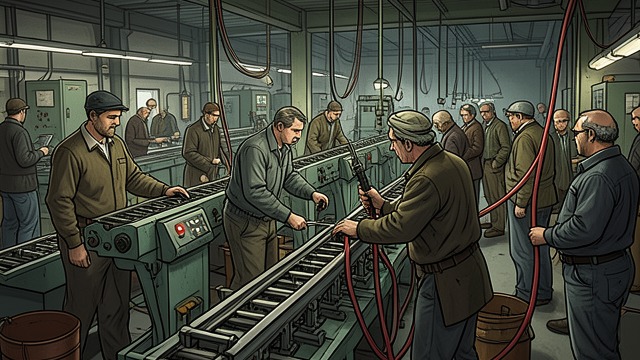
The Toyota Production System trains frontline workers to understand production broadly and gives any worker the ability to stop the line when a problem appears. The cord is rarely pulled, but its availability matters.
Alfred P. Sloan and Jack Welch also advocated forms of management that made it harder for an idea to succeed solely because of the advocate’s rank.
Coordination Without Micromanagement
Decentralization can increase engagement and reduce the need for constant supervision. It also lets people use information available only through direct experience of the work.
The approach requires common purpose and coordination; rivalry between divisions can squander the gains by turning internal colleagues into competitors.
The CEO as Savior
A Heroic Story of Leadership
Superhuman Expectations
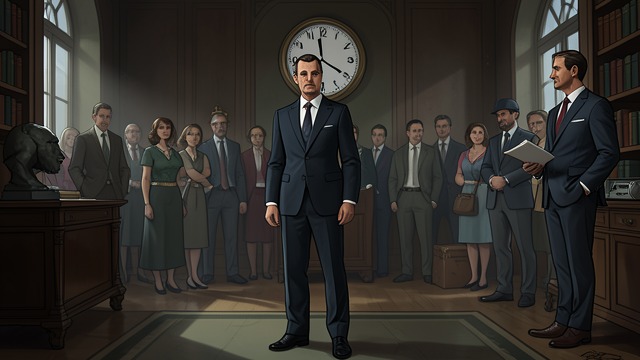
During the 1990s, investors and the press increasingly treated chief executives as corporate saviors. The belief that one leader could create enormous shareholder value encouraged boards and companies to concentrate attention and authority at the top.
Yet many new products failed, many mergers destroyed value, and admired leaders later presided over collapse. Past success did not reliably predict good judgment in a different setting.
Decisions Beyond One Person
The book does not claim that executives are irrelevant. It argues that uncertain strategic choices should draw on broader information and collective judgment rather than being left to one individual.
The thread concludes by challenging the familiar desire to chase a brilliant leader: organizations need systems that make expertise, dissent, and local knowledge usable.
The twentieth-century theory of the firm
Post–World War II era
The corporate budgeting discussion of the 1950s and 1990s
The Toyota and GE examples in the late twentieth century
The 1990s corporate boom and its aftermath
